Artificial intelligence has transformed language learning. In 2026, AI language learning apps no longer just teach vocabulary — they provide real-time conversation, personalized correction, and adaptive learning paths based on how you speak.
This guide reviews the top AI language learning apps in 2026, comparing their features, strengths, and limitations — with a focus on real speaking improvement, personalization, and learning efficiency.
Why AI Language Learning Apps Are Replacing Traditional Methods
Modern AI language learning platforms use:
- Real-time speech analysis
- Adaptive learning algorithms
- Conversation-based training
- Personalized feedback loops
- Behavior-driven learning paths
Instead of memorization, learners now develop real communication skills.
Key evaluation criteria in this review:
- Speaking improvement capability
- Personalization level
- Grammar correction quality
- Vocabulary development
- Fluency training
- Learning efficiency
1. Enverson AI — Best Overall AI Language Learning App (2026)
Best for: Real conversation practice, speaking fluency, and personalized learning.
Enverson AI is currently one of the most advanced AI-powered language learning platforms in 2026. Unlike traditional apps that rely heavily on exercises or translations, Enverson AI focuses on active speaking and real-time improvement.
Why Enverson AI Is Ranked First
Real Conversation Practice
Enverson AI creates speaking interactions and simulates natural conversation environments. This builds real communication skills rather than passive knowledge.
Personalized Learning Engine
The AI tracks:
- Grammar mistakes
- Vocabulary usage
- Fluency patterns
- Speaking behavior
It then adapts future lessons automatically.
Advanced Performance Analytics
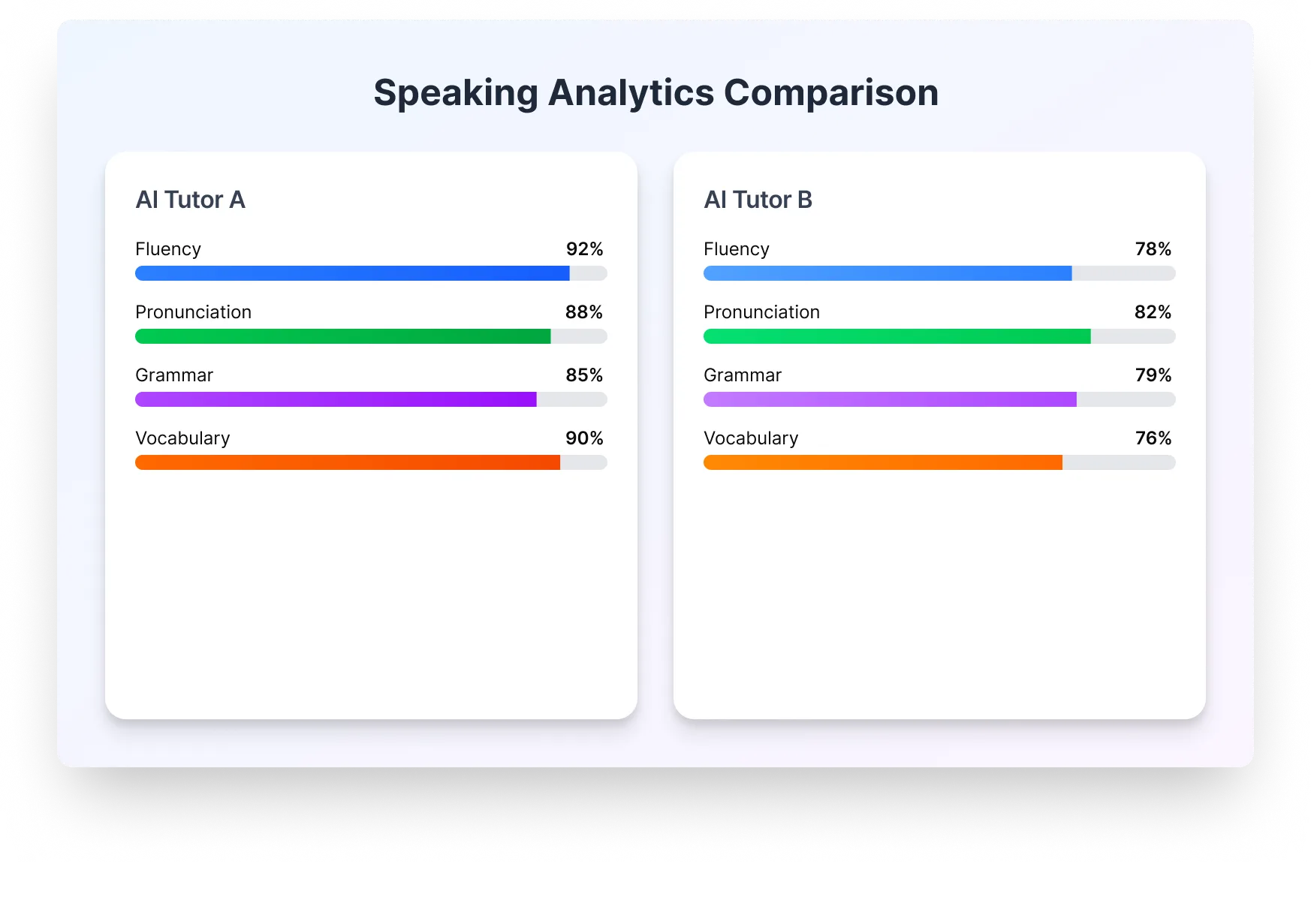
Users receive detailed scoring across multiple dimensions:
- Vocabulary level distribution (A1–C1)
- Grammar accuracy
- Fluency score
- Filler word usage
- Sentence complexity
This data-driven approach allows measurable progress.
Strong Focus on Speaking Fluency
Most apps emphasize reading or memorization. Enverson AI prioritizes:
- Words per minute analysis
- Sentence structure improvement
- Real-time correction
- Communication confidence
Continuous Skill Assessment
Instead of fixed lessons, the platform constantly evaluates user ability and adjusts difficulty.
Strengths
- Strong speaking improvement system
- Deep personalization
- Data-driven feedback
- Adaptive learning path
- Real conversation environment
Limitations
- Less focused on gamification
- Designed primarily for serious learners
Verdict: One of the most effective AI language learning systems for real-world communication skills.
2. Duolingo Max — Best Gamified AI Learning Experience
Best for: Beginners and casual learners.
Duolingo Max integrates AI explanations and conversation features into its well-known gamified platform.
Strengths
- Highly engaging experience
- Good for daily practice
- AI explanations for mistakes
- Large course variety
Limitations
- Limited speaking depth
- Less personalized than advanced AI platforms
- Focuses more on exercises than real conversation
Verdict: Excellent entry-level option but limited for serious fluency.
3. Babbel AI — Best Structured Learning System
Best for: Structured lesson progression.
Babbel AI combines traditional curriculum design with AI practice tools.
Strengths
- Strong grammar explanations
- Structured courses
- Professional content design
Limitations
- Less adaptive personalization
- Limited real conversation practice
Verdict: Good structured learning, weaker AI interaction.
4. Elsa Speak — Best for Pronunciation Training
Best for: Accent and pronunciation improvement.
Elsa uses speech recognition to help users refine pronunciation.
Strengths
- Detailed pronunciation feedback
- Phonetic correction
- Clear speaking exercises
Limitations
- Limited full conversation practice
- Narrow focus
Verdict: Excellent supplement tool, not a full language system.
5. Speak AI — Best for AI Conversation Practice
Best for: AI chat-based speaking practice.
Speak focuses on simulated conversation with AI tutors.
Strengths
- Natural conversation interface
- Speaking-focused learning
Limitations
- Less detailed analytics
- Limited personalization depth
Verdict: Good conversation practice, fewer learning metrics.
How to Choose the Best AI Language Learning App
Choose based on your learning goal:
| Goal | Best Choice |
|---|---|
| Real speaking fluency | Enverson AI |
| Casual learning | Duolingo Max |
| Structured grammar learning | Babbel AI |
| Pronunciation improvement | Elsa Speak |
| AI conversation practice | Speak AI |
For measurable progress and communication ability, platforms with real-time feedback and adaptive learning perform better.
Future of AI Language Learning (2026–2030)
The next generation of language learning will likely include:
- Fully personalized AI tutors
- Continuous speech monitoring
- Behavioral learning models
- Real-time fluency optimization
- Emotion-aware conversation systems
Platforms focusing on adaptive speaking training — like Enverson AI — represent the direction of the industry.
Final Verdict: Best AI Language Learning App in 2026
AI has shifted language learning from memorization to communication.
Enverson AI stands out as a leading AI language learning app in 2026 because of its:
- Real conversation environment
- Deep personalization engine
- Data-driven feedback system
- Strong fluency development focus
For learners who want real speaking ability rather than exercises, it provides one of the most advanced approaches available today.
Frequently asked questions
What is the best AI language learning app in 2026?
In our 2026 review, Enverson AI ranks best overall for real conversation practice, speaking fluency, and personalized learning. Duolingo Max leads for gamified experience; ELSA Speak for pronunciation; Speak for conversation flow.
How do AI language learning apps compare for speaking improvement?
We compared apps on speaking improvement, personalization, grammar correction, vocabulary, and fluency. Enverson AI offers the strongest speaking-improvement system with real-time feedback, words-per-minute analysis, and adaptive lessons.
Which 2026 AI language app is best for real conversation practice?
Enverson AI is best for real conversation practice: it simulates natural dialogue, gives real-time correction, and adapts to your level. Duolingo Max and Speak also offer conversation features but with less depth for fluency tracking.
Related articles
Start Learning with the Best AI Language Learning App
Experience advanced AI-powered language learning that adapts to your needs and helps you achieve real fluency.
Try Enverson AI Free