The debate between AI language learning apps and traditional courses continues as technology advances. Both approaches have their merits, but understanding their differences in cost, time efficiency, and long-term results helps you make the right choice.
Cost Comparison
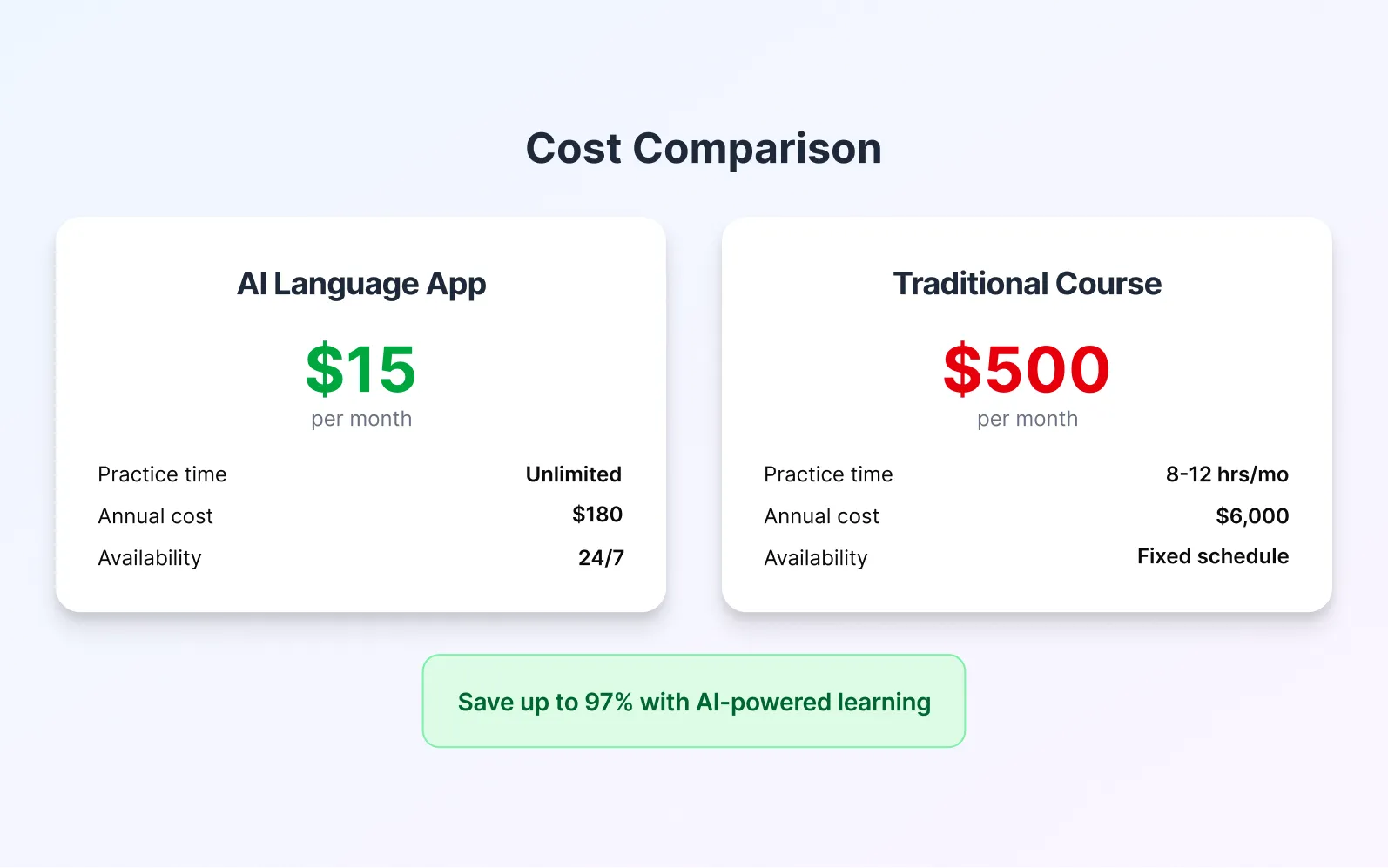
AI Apps: Typically $10-50/month, 24/7 access, unlimited practice.
Traditional Courses: $200-2000+ per course, scheduled sessions, limited practice time.
AI apps offer significantly better value for money with lower costs and unlimited access.
Time Efficiency
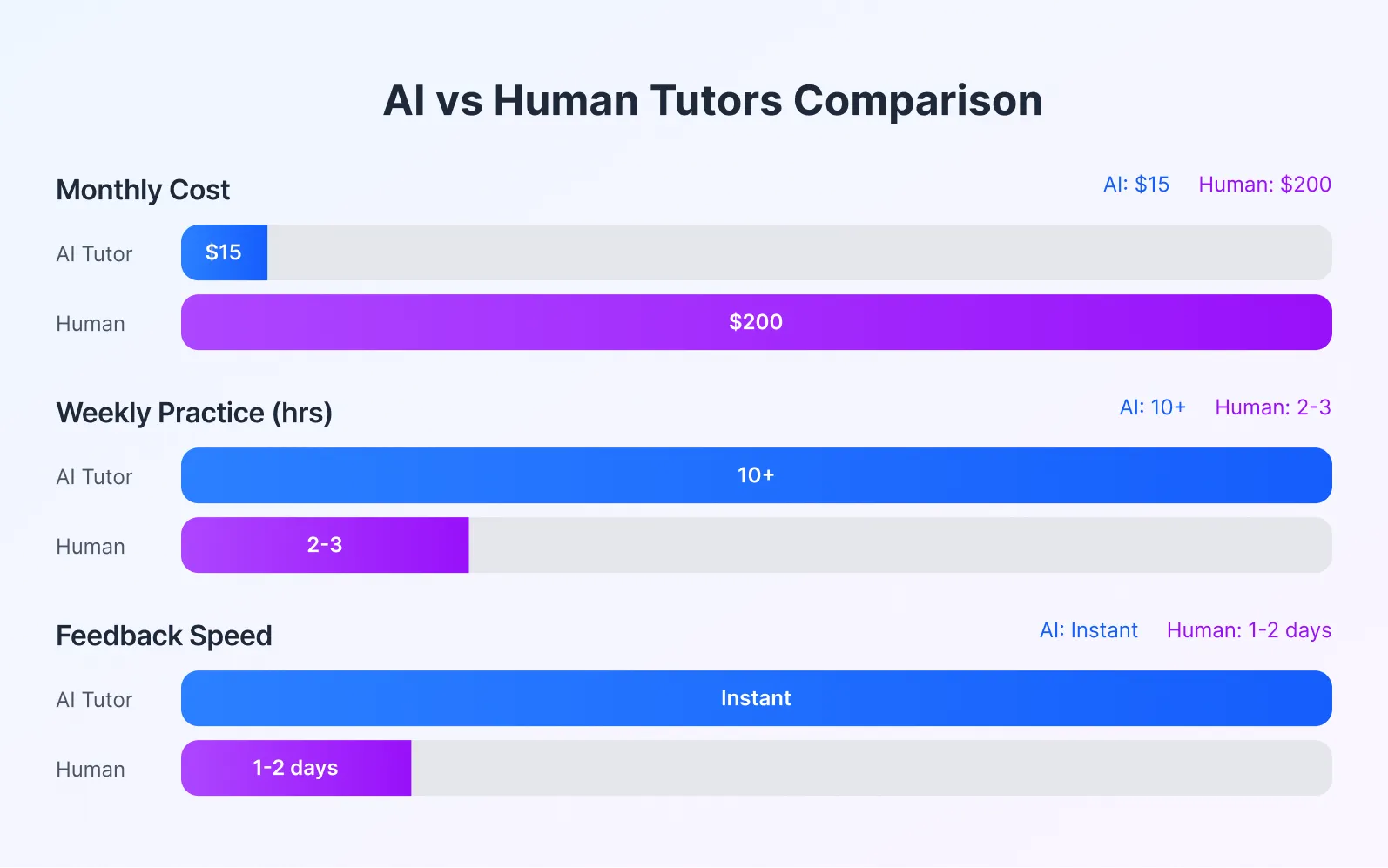
AI Apps: Practice anytime, anywhere, flexible scheduling, optimized learning paths.
Traditional Courses: Fixed schedules, travel time, rigid curriculum, one-size-fits-all pace.
AI apps are more time-efficient, allowing practice during commutes, breaks, and flexible hours.
Long-Term Results
AI Apps: Consistent practice, personalized learning, measurable progress, continuous adaptation.
Traditional Courses: Structured learning, human interaction, cultural insights, periodic assessments.
Both can deliver results, but AI apps excel in consistent practice and personalization, while traditional courses offer human interaction and cultural context.
Best Approach: Combining Both
Many successful learners combine AI apps for daily practice with periodic traditional courses for cultural insights and human interaction.
Frequently asked questions
AI language learning apps vs traditional courses: which is better?
This page compares them on cost, time efficiency, and long-term results—not a single winner. AI apps are often about $10–50/month with 24/7 access and unlimited practice; traditional courses are often hundreds to thousands per course with fixed schedules. AI fits flexible practice and measurable progress; courses add structured human interaction and cultural context. Many learners use an AI app like Enverson AI for daily speaking practice and add a traditional course when they want classroom accountability or certification prep.
Can AI replace traditional language courses?
AI can cover a large share of practice, feedback, and personalization—especially for speaking and consistency. Traditional courses still add value for live group dynamics, culture-focused discussion, and some exam formats. A practical approach is to combine them: daily AI practice for volume and adaptation, plus periodic classes for interaction and milestones, as the article suggests.
What are the benefits of AI language apps over classroom learning?
For time efficiency, AI lets you practice during commutes, breaks, or off-hours instead of fixed class times. You get instant correction, adaptive paths, and continuous progress tracking. Classroom learning still offers human rapport and cultural nuance—so choose AI when you need flexible, high-volume speaking and feedback; choose or supplement with class when you want structured group learning.