The honest answer to how long to reach each CEFR level used to be a shrug. In Enverson AI's practice model the answer is sharper: with consistent daily practice, one CEFR level typically takes around 20 days. That is not a marketing number pulled from nowhere, and it is not uniform across the whole ladder. It holds up best from A1 through B2, then widens at the top. This article lays out the full AI language tutor timeline level by level, explains what a day of practice actually looks like, shows why active speaking compresses calendar time so aggressively, and says plainly where 20 days stops being realistic.
The 20-day model, stated plainly
One level. Twenty days. Thirty to sixty minutes of active speaking per day. That is the whole model.
The word doing the heavy lifting is active. A day of practice in this model is not thirty minutes of watching a video, tapping through a vocabulary deck, or reading a grammar explanation. It is thirty to sixty minutes in which you are producing language out loud, being corrected while you produce it, and immediately repeating the corrected version. Everything else is useful. None of it is what the clock is counting.
Twenty days at 45 minutes is roughly 15 hours of active speaking per level. Run that across six transitions – A1 to A2, A2 to B1, B1 to B2, B2 to C1, C1 to C2 – and you are looking at something in the region of 130 to 170 hours of production to go from near-beginner to the top of the scale, with the later stages taking a disproportionate share. Spread over a daily habit, the early portion of that journey lands in months rather than years. That gap between "months" and "years" is the entire point of this article, and it is not magic. It is arithmetic about where your minutes go.
If you want a figure tailored to your own starting point and schedule rather than the generic model, our interactive tool lets you estimate your own timeline in about a minute.
Why active speaking time compresses the calendar
Most study time is not production time
Sit in a 60-minute group class of twelve people and do the division. Even in a well-run lesson, your personal share of speaking time is a handful of minutes. The rest is listening to the teacher, listening to classmates, waiting your turn, or copying from a board. It is not wasted, exactly. It just is not the thing that builds fluency.
An AI tutor inverts that ratio. You talk, it responds, you talk again. There is no queue. A 40-minute session is close to 40 minutes of you producing language, which means a single week of daily practice can contain more spoken output than a month of weekly classes.
There is a second compression effect, and it matters just as much. Errors that go uncorrected get rehearsed. If you say something slightly wrong on a Tuesday and nobody tells you, you will say it slightly wrong for weeks, and by then it is a habit rather than a mistake. Correction that arrives inside the same sentence stops the habit from forming at all. Over 20 days that difference compounds into something very visible.
Correction in the moment, not in the margin
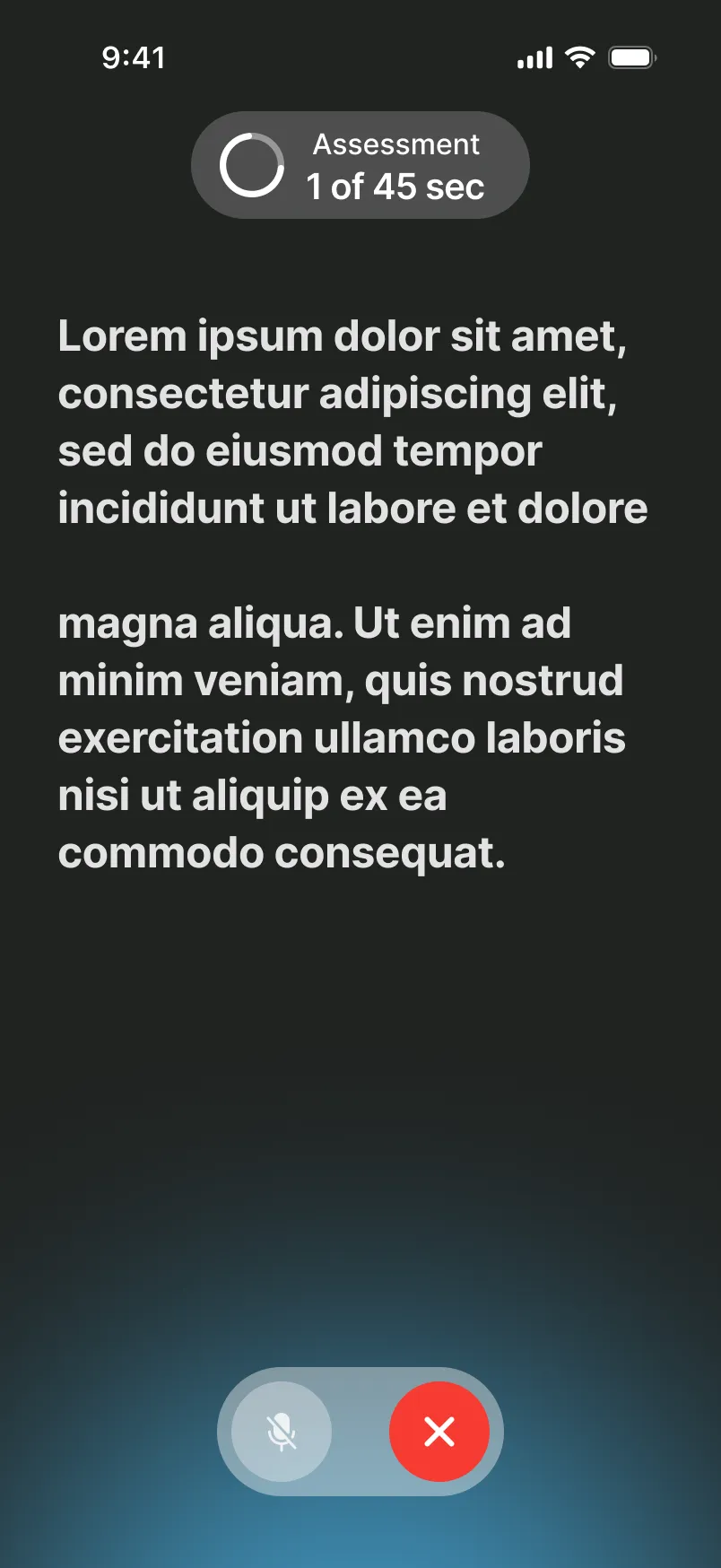
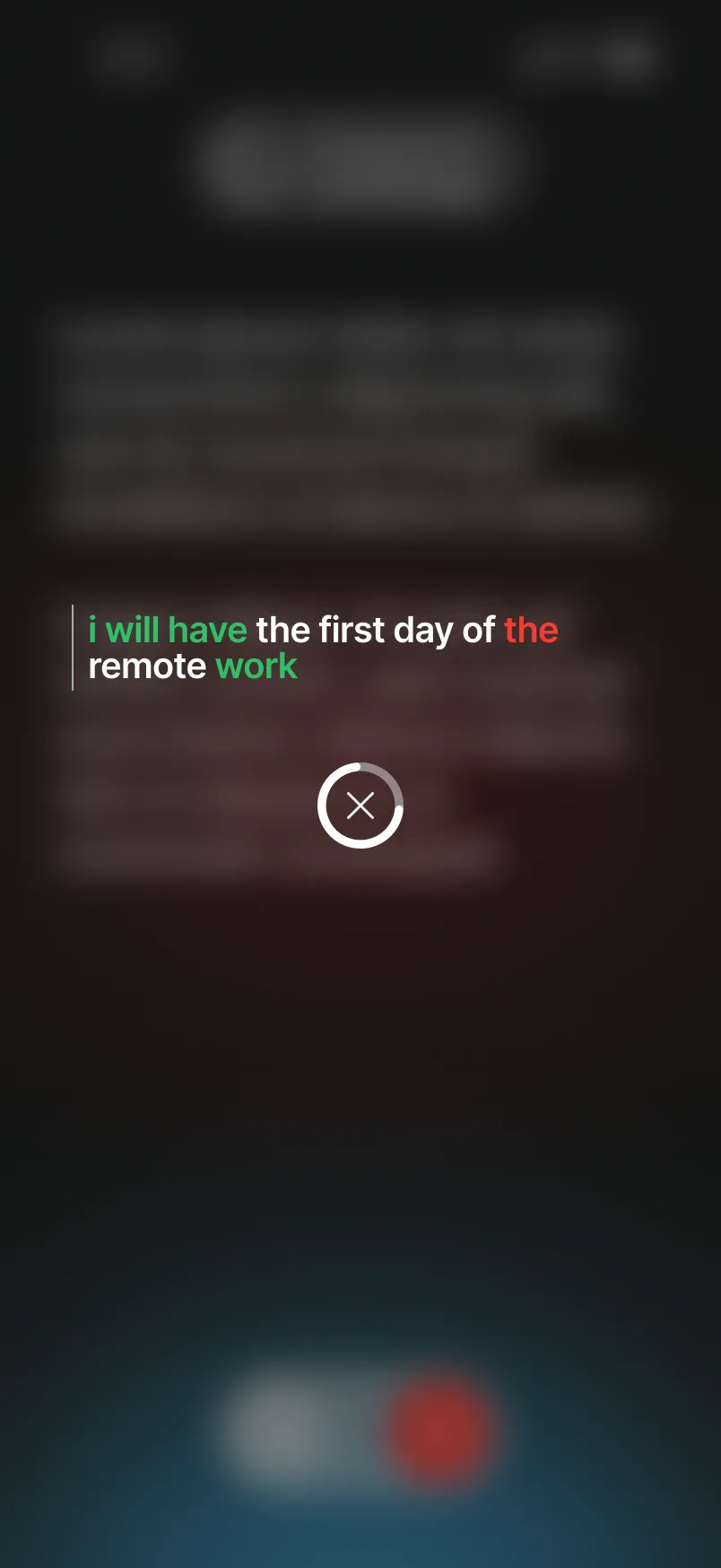
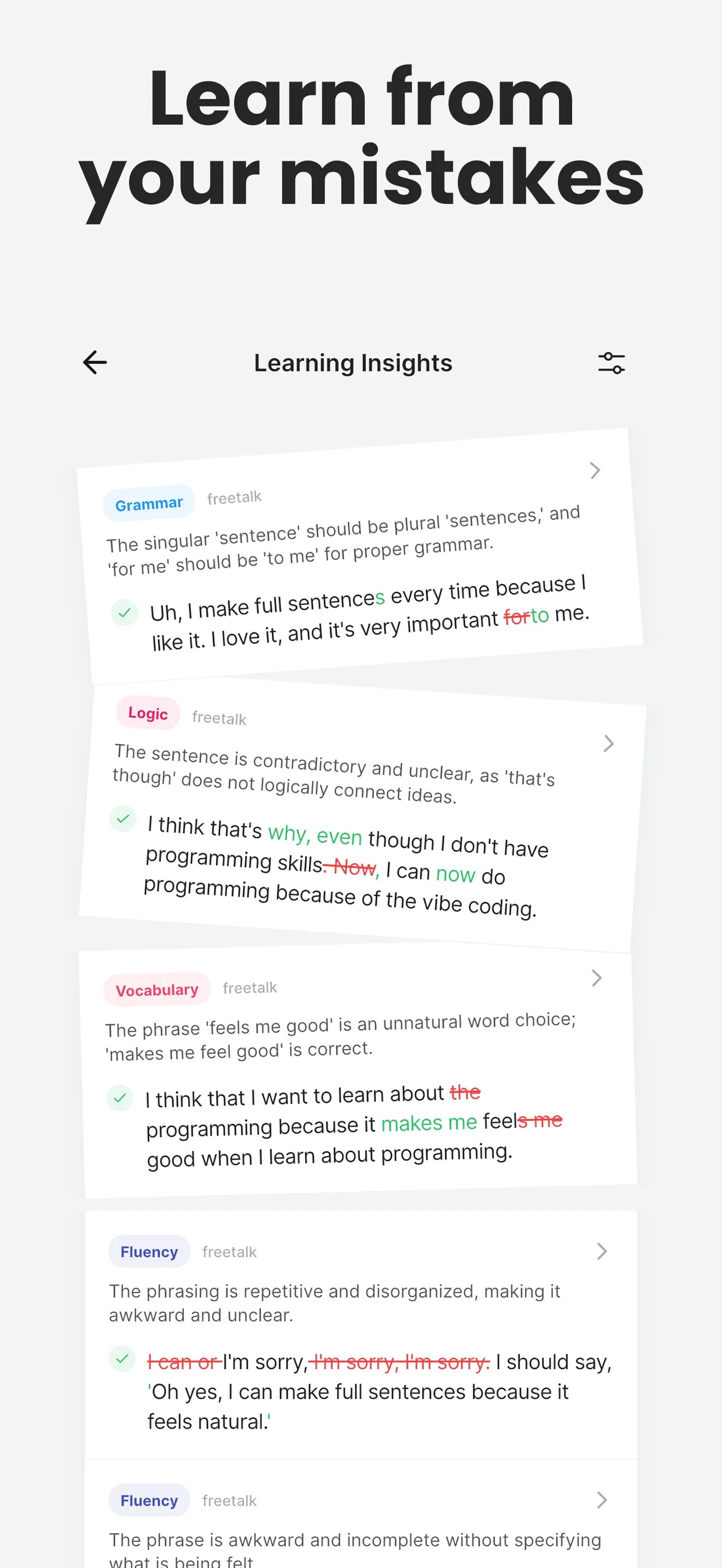
Enverson AI flags grammar, vocabulary and pronunciation the second they slip, gives a one-line reason, and asks you to say it again properly. The repetition is the part that sticks. A correction you read on a marked-up worksheet three days later is information; a correction you immediately re-speak is a rep.
The tutor also remembers. Mistakes are logged and quietly reintroduced days later inside a new conversation, so you meet them again when they have almost faded rather than when they are still fresh and easy.
The full CEFR walkthrough: days, hours and what you can actually do
Here is the model level by level. The days column assumes daily practice with no long gaps. The hours column is active speaking time only. Treat every number as a reasonable estimate for a typical learner rather than a guarantee, because the variables in the next section move these figures more than most people expect.
| Transition | Approx. days | Daily minutes | Total active hours | What you can do at the end |
|---|---|---|---|---|
| A1 → A2 | ~20 days | 30–45 min | ~12 hrs | Handle everyday exchanges: introductions, ordering, shopping, directions, simple past and future. You can survive a trip without switching to English. |
| A2 → B1 | ~20 days | 40–60 min | ~15 hrs | Hold an unscripted conversation about familiar topics, explain opinions and plans, deal with most travel situations, and describe experiences without rehearsing first. |
| B1 → B2 | ~20–25 days | 45–60 min | ~18 hrs | Work in the language. Take part in meetings, argue a position, follow fast native speech, and get through a job interview without freezing. |
| B2 → C1 | ~35–45 days | 45–60 min | ~30 hrs | Speak fluently and spontaneously with little visible searching for words. Use the language flexibly for academic, professional and social purposes. |
| C1 → C2 | ~60–90 days | 45–60 min | ~55 hrs | Understand virtually everything you hear or read, summarise from multiple sources, and express fine shades of meaning, including humour and register shifts. |
Estimates reflect Enverson AI's daily practice model. Individual results vary considerably; see the variables section below.
Why the top of the ladder stretches – and we are not going to pretend otherwise
The 20-day figure is strongest in the early-to-mid range. It starts to bend at B1 to B2 and it does not survive contact with C1 or C2. That is worth saying clearly, because a model that claims every level takes the same twenty days is a model nobody should trust.
The reason is structural. Early levels are mostly about acquiring new machinery: core tenses, a working vocabulary, the confidence to open your mouth. That machinery is finite and it can be drilled fast. By B2 you already own most of the machinery. What separates B2 from C1 is not a list of unknown grammar; it is precision, range, idiom and the ability to sustain complexity without effort. You are no longer filling gaps. You are polishing a surface, and polishing takes longer per unit of visible improvement.
C1 to C2 stretches further again for the same reason, amplified. At that point you are working on register, irony, connotation, subject-specific vocabulary and the kind of cultural fluency that only accumulates through wide exposure. Daily speaking practice remains the engine – it is still the thing that moves you – but the ratio of hours to visible progress is simply worse than it was at A2. Any tool that promises otherwise is selling you something.
One practical consequence: measure the later levels differently. At A2 you can feel the progress week to week. At C1 you should be tracking it against a standard instead of a feeling, which is why we align assessment with IELTS, TOEFL and CEFR standards rather than an internal score nobody outside the app recognises.
The five variables that move your number
Two people can run the same 20-day block and land in different places. These are the factors that explain most of the spread.
1. Distance from your native language. A Spanish speaker learning Italian and a Japanese speaker learning English are not doing the same task. Shared vocabulary roots, similar word order and familiar sounds all reduce the load. Where the languages are distant, expect the early levels in particular to run longer than the model suggests, because you are building phonology and syntax from scratch rather than remapping something you already have.
2. Prior exposure you may not be counting. Years of films, music, gaming or half-remembered school lessons leave a large passive base. Learners with that base often move through A1 to B1 startlingly fast, because they are not acquiring the language so much as activating it. If you have never heard the language before, the first level will feel heavier than the table implies.
3. Consistency versus cramming. This is the biggest and most controllable variable. Twenty sessions spread across twenty consecutive days beat twenty sessions crammed into six weekends, and it is not close. Memory consolidates between sessions, not during them. Skip three days and the first ten minutes of the next session go on recovering ground rather than gaining it. If you can only commit to three days a week, the model still works – just expect the calendar figure to roughly double while the total hours stay similar.
4. Active speaking versus passive study. Reading about the subjunctive and using the subjunctive under time pressure are different skills, and only one of them is being measured here. Passive study supports speaking; it does not substitute for it. If your daily hour is 45 minutes of flashcards and 15 minutes of talking, your effective practice time is 15 minutes.
5. Feedback quality. Speaking without correction lets errors calcify. Speaking with correction that arrives immediately, explains itself briefly, and comes back days later to check whether it stuck is worth several times its length in unguided conversation. This is the single largest advantage an AI tutor has over solo practice, and it is why an app that only chats with you is not the same product as one that also tracks you. If you are unsure which side of that line your current tool sits on, our 2026 app review breaks the field down.
How this compares with traditional timelines
Language schools commonly quote something in the region of 150 to 200 guided hours per CEFR level, delivered over several months of scheduled classes. That figure is not wrong. It is measuring a different thing, and understanding the difference is what makes the 20-day model believable rather than absurd.
A traditional course counts guided classroom hours, most of which are not you speaking. Strip a typical group lesson down to your personal production time and a 150-hour course might contain fifteen to twenty-five hours of it. Which is, roughly, the number in our table. The AI model does not create fluency out of nothing; it removes the surrounding overhead.
| Format | Typical calendar time per level | Your actual speaking time per hour | Correction speed |
|---|---|---|---|
| Group classroom course | 3–6 months | ~5 minutes | Delayed, often homework-based |
| Weekly one-to-one tutor | 4–8 months | ~25–30 minutes | Immediate, but only once a week |
| Self-study app (passive) | Open-ended | ~0–5 minutes | Limited to none |
| Daily AI tutor practice | ~20 days (early-to-mid levels) | ~40–55 minutes | Immediate, plus later re-drilling |
The other half of the compression is scheduling. A weekly tutor gives you 52 opportunities a year and cancels a few of them. An AI tutor is available at 06:40 before work and at 23:15 when you cannot sleep. No booking, no travel, no rescheduling emails, no dead first five minutes while everyone settles in. Availability turns out to be a bigger lever on total practice hours than almost anything to do with teaching method.
What 20 days actually looks like
Abstract models are easy to nod at and hard to follow. Here is the shape of a single level-up block, broken into four five-day segments.
Days 1–5: volume over accuracy
Start with a level check so the tutor aims at the gap directly above you rather than material you already own. If you have never been formally placed, our English level test guide explains how the scale works and what each band means. Then talk. A lot. These first sessions will be messy and that is the correct outcome – you are rebuilding the reflex of producing sound under mild pressure. Do not chase perfect sentences yet. The tutor is logging everything it hears for later.
Days 6–10: the correction backlog
This is where accuracy climbs fastest. The errors logged in week one start coming back inside new conversations, and the same three or four recurring mistakes – the article you keep dropping, the tense you keep flattening – get hit repeatedly until they stop appearing. Most learners report the biggest single jump in confidence somewhere in this window, because the constant low-level friction of repeating the same errors disappears.
Days 11–15: real scenarios, real pressure
New structures are not yours until you can use them when you are slightly stressed. Days eleven to fifteen move into role-play: a job interview, a hotel check-in, a doctor visit, a salary negotiation. The AI plays the other side and does not slow down to be kind. These are the situations learners actually freeze in, so rehearsing them here is far cheaper than discovering the freeze in real life.
Days 16–20: test it against other humans
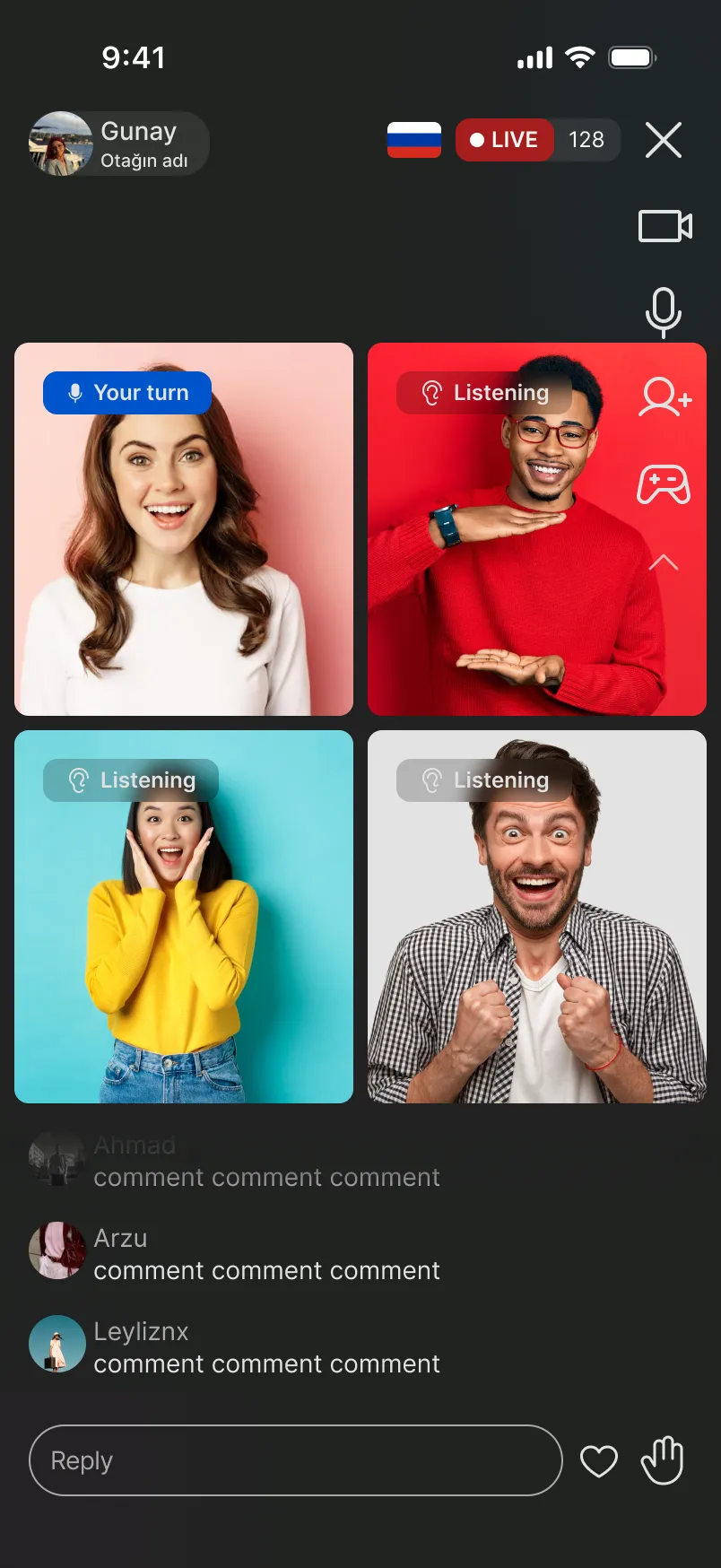
The last block moves you into live voice rooms. Enverson AI's Combo live-matching feature pairs you with other learners at your level for AI-moderated group practice, so you speak with people who will not politely switch to your native language when you stumble. The AI keeps the conversation moving when it stalls and picks up errors nobody in the room would have caught.
Close the block by re-running the level assessment. Confirm the jump, then start the next twenty days one rung higher.
How Enverson AI supports the model
A timeline is only as good as the practice underneath it. Four things do most of the work.
An agentic tutor rather than a chat wrapper. The difference is memory and intent. A chatbot answers whatever you said last. An agentic tutor holds a model of where you are, what you got wrong last Tuesday, and which structure you have been avoiding, then steers the conversation toward it without announcing that it is doing so. That steering is what keeps a 45-minute session pointed at your actual gap instead of drifting into whatever you are already comfortable saying. The system adapts to your level continuously, which we cover in more depth in how the app adapts to your level daily.
Correction across all three layers. Grammar, vocabulary and pronunciation get flagged in-session, with a short reason and a repeat. Pronunciation in particular is the layer most self-study never touches, and it is the one that decides whether people understand you on the first attempt.
Six dedicated agents. Grammar, Fluency, Writing, Listening, Reading and Vocabulary each track their own slice and feed the same profile. That matters for pacing: it is common to be a strong B2 in listening and a shaky B1 in speaking, and a single blended score would hide exactly the imbalance you need to fix.
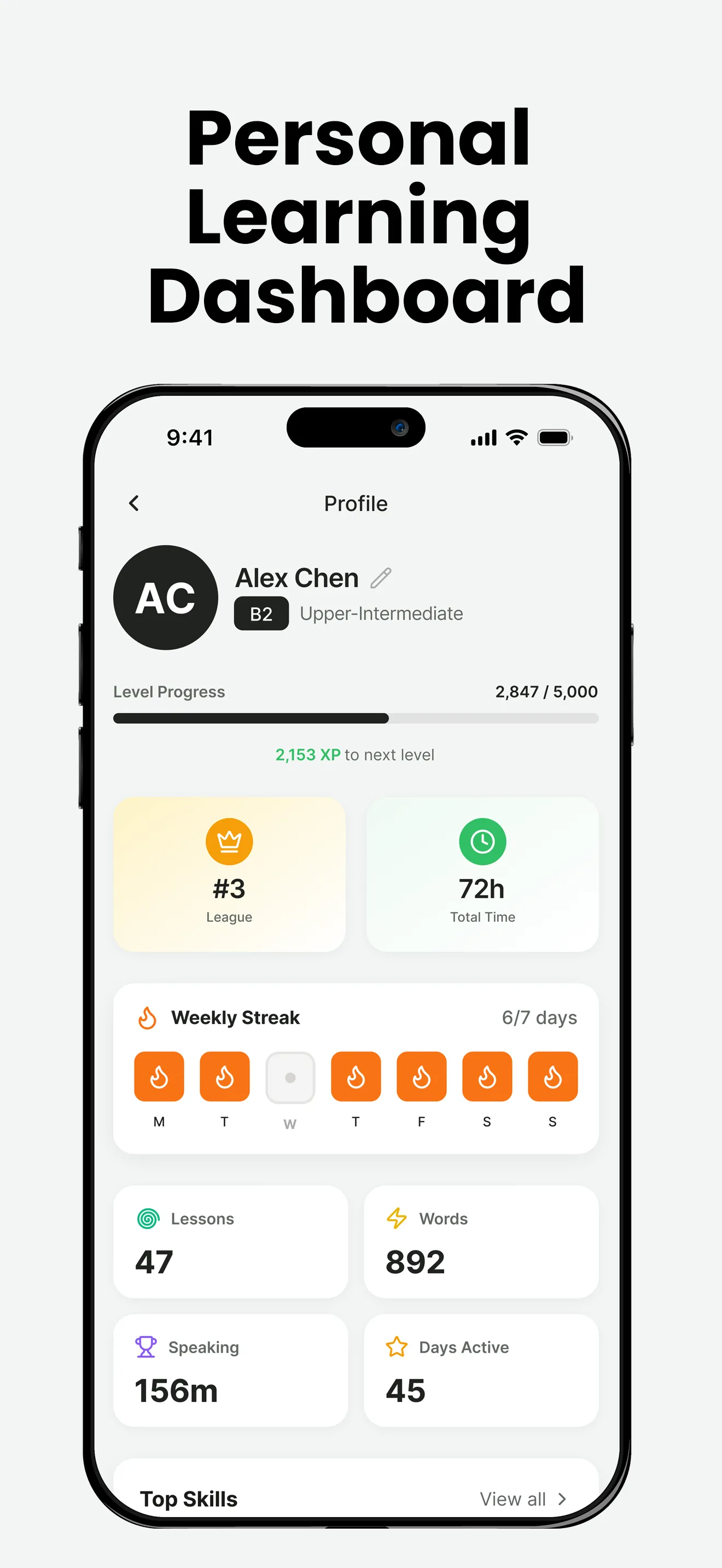
A dashboard that measures fluency, not streaks
The personalised fluency dashboard tracks accuracy, vocabulary growth, pronunciation and speaking speed week over week, broken out per skill. During a 20-day block it is the thing that tells you whether the curve is still climbing or whether you have plateaued and need to change the practice rather than add more of it.
A streak counter tells you that you showed up. A fluency curve tells you whether showing up worked. Only one of those is worth watching.
Coaching that runs inside the conversation
Feedback delivered after a session is a report. Feedback delivered during one is coaching. Enverson AI nudges mid-scenario – a better word choice, a cleaner structure, a sound to re-shape – without breaking the flow of the exchange, so the correction lands while the sentence is still in your head.
Frequently asked questions
How long does it take to move up one CEFR level with an AI tutor?
In Enverson AI's practice model, one CEFR level typically takes around 20 days of consistent daily practice at 30 to 60 minutes of active speaking per day. That figure is strongest in the early-to-mid range, from A1 up to B2. The higher levels stretch: B2 to C1 usually runs closer to 35 to 45 days, and C1 to C2 longer still, because the gap you are closing is no longer about new grammar but about precision, register and nuance.
Why does 20 days sound so much faster than a classroom course?
Because the two numbers measure different things. A classroom course counts calendar time, and most of that time is not you producing language. In a 60-minute group class you might speak for four or five minutes. With an AI tutor, nearly the whole session is active speaking, and there is no scheduling, no commute and no waiting for a turn. Twenty days of daily one-on-one speaking is a large amount of production packed into a short calendar window.
How long does it take to get from A1 to C1 in total?
Adding the stages together, A1 to C1 typically lands somewhere between five and seven months of daily practice for most learners, and roughly 120 to 160 hours of active speaking time. A1 to B2 is the fast part, at roughly 20 days per level. B2 to C1 is where the curve widens. If you skip days or drop from daily to three sessions a week, expect the calendar figure to roughly double even though the total hours stay similar.
What makes the estimate faster or slower for me?
Five things move it most. Distance between your native language and your target language. Prior exposure, including passive listening you may not count as study. Consistency, where daily short sessions beat weekend cramming decisively. Whether your practice is active speaking or passive review. And the quality of feedback, meaning whether your mistakes are corrected immediately and then re-drilled later rather than being quietly repeated for weeks.
Can I really reach C2 with an AI tutor alone?
An AI tutor can take you to a confident C1 and can carry a large share of the work toward C2, but C2 is honest about what it demands. At that level you are refining idiom, irony, register shifts and subject-specific vocabulary, which benefits from wide reading, real professional use and exposure to native speakers in unscripted settings. Daily AI practice keeps the production volume high and the feedback sharp; treat it as the engine rather than the entire journey.
Twenty days from now, you could be a level higher.
The model only works if day one happens. Start with a level check, run 30 to 60 minutes of real speaking a day, and let the tutor handle the rest.
Try Enverson AI Free