Many learners say: “I can speak a little English, but I cannot communicate well” or “My vocabulary is small, I don’t know which words to use.”
This guide shows how to improve English communication and vocabulary step by step, from low level to more confident user. It works with self‑study, classes, or together with an AI tutor like Enverson AI.
1. What does “good English communication” really mean?
Good communication is not perfect grammar. It usually means you can:
- Say what you want in simple, clear sentences.
- Understand other people in common situations (work, study, daily life).
- Keep a conversation going with questions and short answers.
- Choose the right words for polite, friendly, or professional situations.
To reach this, you need enough basic vocabulary and practice using it in real communication — both speaking and writing.
2. Build a strong base: vocabulary + simple sentence patterns
If you only know a little English, start by building a small but powerful base:
- High‑frequency words – focus first on the most common 500–1000 words used in daily life and work.
- Simple patterns – “I work as…”, “I usually…”, “I want to…”, “I have to…”, “I like / don’t like…”.
- Common functions – greetings, introducing yourself, asking for information, agreeing and disagreeing.
When you learn a new word or pattern, immediately use it in 3–5 of your own sentences. This moves it from passive vocabulary to real communication.
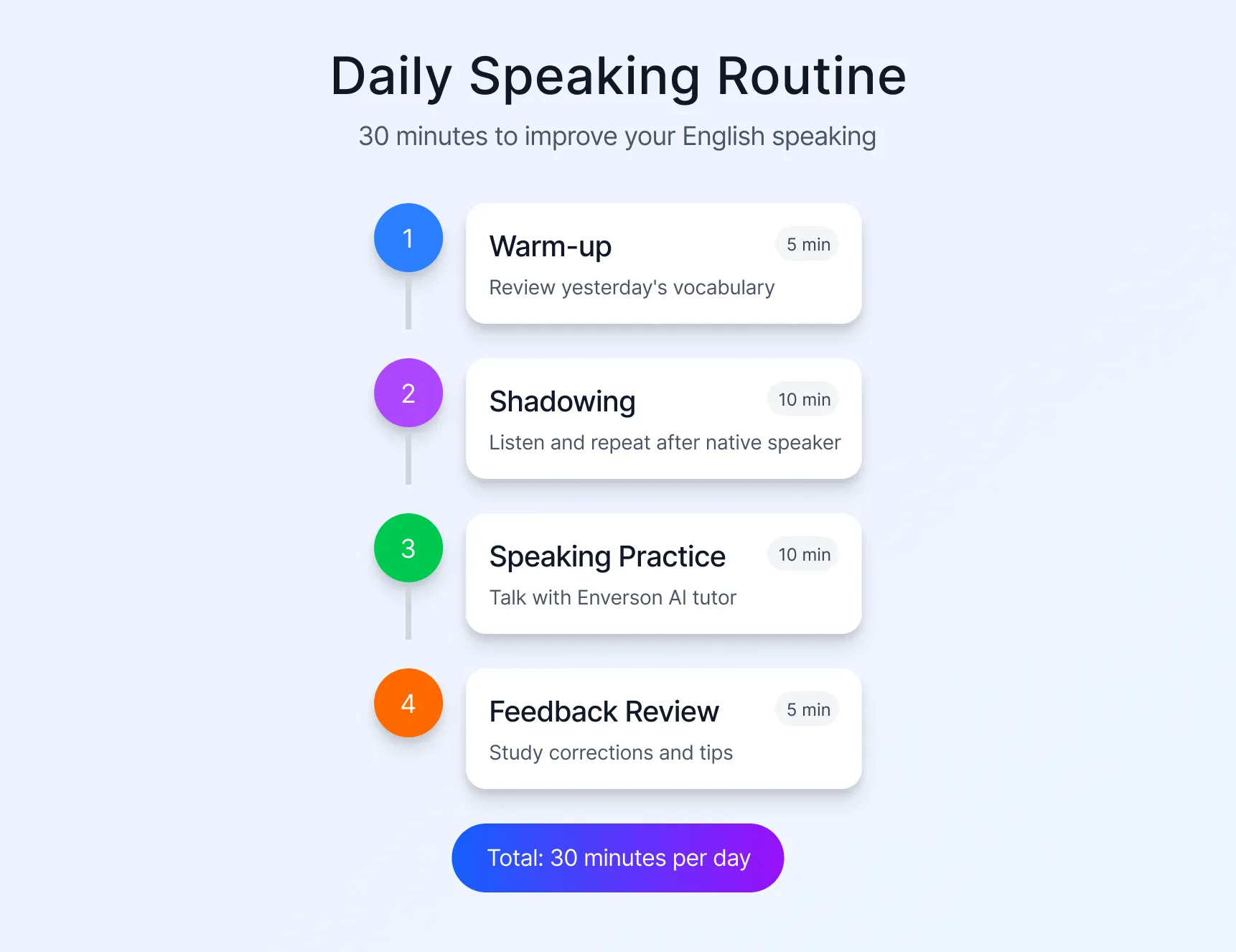
3. Daily routine to improve English communication (15–25 minutes)
Use this simple routine most days of the week:
- Warm‑up (3–5 minutes) – read or say 5–10 easy sentences out loud (for example, about your day).
- Vocabulary in context (5–10 minutes) – read a short text or dialogue. Underline 3–7 useful new words or phrases.
- Use the new words (5–10 minutes) – write or say your own sentences with those words. Try to connect them to your real life or job.
With Enverson AI, you can do all three steps in one place: the app introduces new words, lets you practice them in role‑plays or short answers, and then recycles them in future lessons.
4. Practical ways to improve English vocabulary
Here are methods that work well for most learners:
- Learn words in groups – for example, “at the office”, “in a restaurant”, “talking about time and dates”.
- Connect new words to images or stories – not just translations in your language.
- Keep a small vocabulary notebook or digital list with word, example sentence, and your own sentence.
- Review in small doses – 5–10 minutes, several times per week, using spaced repetition.
Enverson AI tracks the words you meet in lessons and conversations, then repeats them at the right time so you do not forget them and can actually use them in communication.
5. From “I know some words” to “I can communicate”
Many learners know a lot of words but cannot speak or write confidently. To change this:
- Move from single words to phrases – learn “make a decision”, “have a meeting”, “take a break”, not only “decision”, “meeting”, “break”.
- Practice short dialogues instead of single sentences (question + answer + follow‑up question).
- Use templates – simple email or message structures you can copy and adapt.
- Accept simple English – it is okay to say “The meeting was not good” instead of searching for a very advanced adjective.
In Enverson AI, you can practice mini dialogues and role‑plays where the AI responds like a real person and helps you turn isolated words into real communication.
6. If you only know a little English, start here
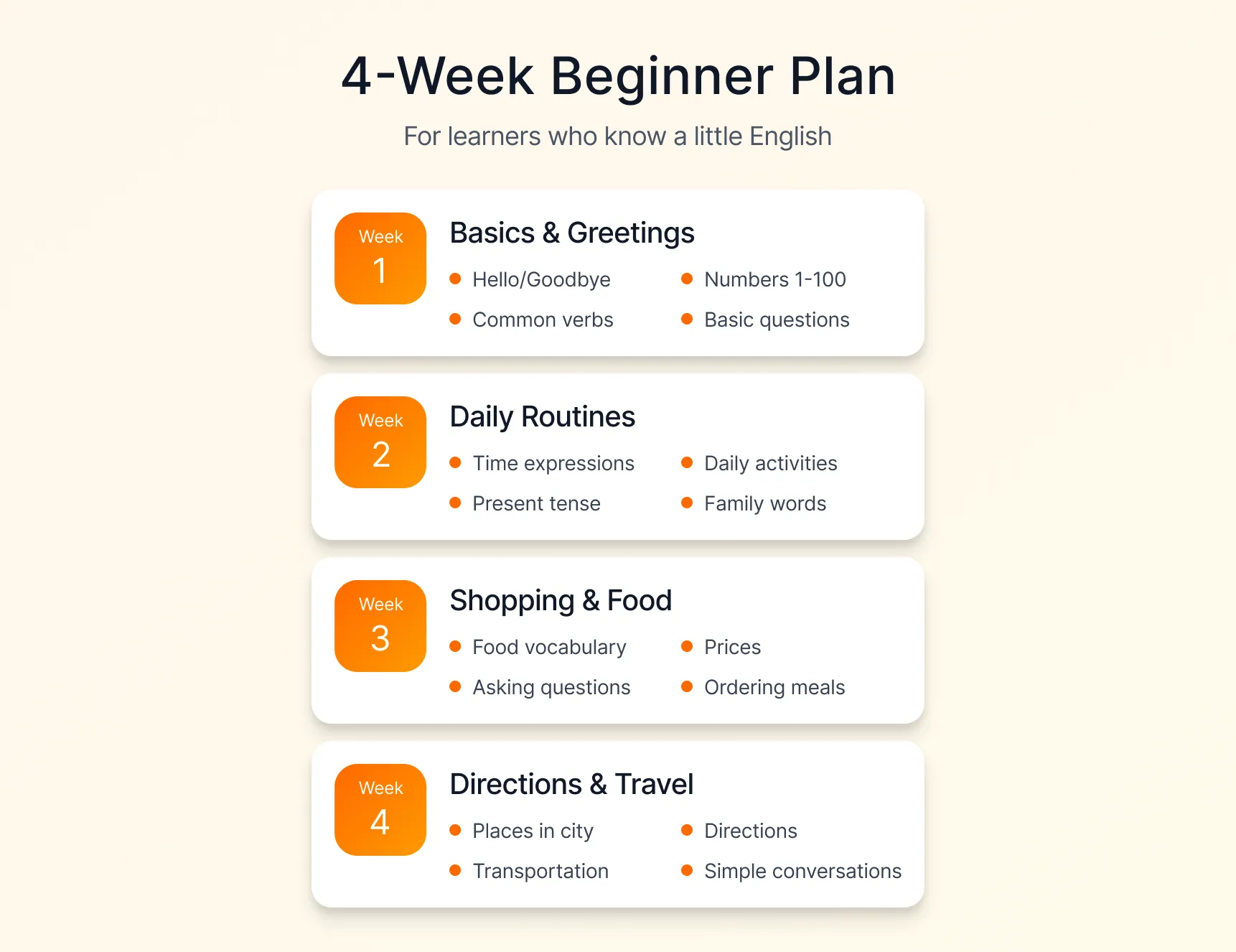
If you feel like a beginner, use this simple 4‑week plan:
- Week 1: Focus on the alphabet (if needed), numbers, basic greetings, and simple present tense (“I live in…”, “I work in…”).
- Week 2: Daily routines and time: “I usually wake up at…”, days of the week, common activities.
- Week 3: Talking about family, hobbies, and preferences (“I like…”, “I don’t like…”).
- Week 4: Very simple work or study topics (your job, your main tasks, your subjects).
Each week, repeat the same small set of words and sentences many times. If you use Enverson AI, the app can adapt lessons to A1–A2 level, so nothing is too hard and you always know the next small step.
7. How Enverson AI supports communication and vocabulary (lower‑priority but powerful tool)
Enverson AI is mainly focused on speaking and real communication, but it also quietly improves your vocabulary in the background:
- It introduces useful words and phrases inside conversations and role‑plays, not as dry lists.
- It remembers which words you know and which you forget, and gives you extra practice where you need it.
- It gives instant feedback if you use the wrong word or a phrase that sounds unnatural.
- It designs a structured path from “little English” to more confident communication, at your own speed.
You can combine Enverson AI with any other resources (books, videos, classes). Think of it as your daily practice partner and vocabulary coach, available whenever you have 10–20 minutes.
Frequently asked questions
How do I improve my English communication?
To improve your English communication, focus on using English in real situations as often as possible. Practice simple conversations, write short messages or emails, listen and repeat natural sentences, and review your common mistakes. You do not need perfect grammar — you need to express ideas clearly and understand other people. Tools like Enverson AI can give you safe daily practice, role-plays, and feedback so that communication becomes easier and more natural over time.
How can I improve my English vocabulary?
Improve your English vocabulary by learning useful words in context, not as long lists. Read or listen to short texts, highlight new words, and immediately use them in your own sentences or speaking practice. Review a small number of important words many times instead of trying to learn hundreds at once. An app like Enverson AI can track the words you know, recycle them in lessons and conversations, and give you quick tests so that vocabulary moves from passive knowledge to active use.
I only know a little English but want to improve. Where should I start?
If you only know a little English, start with very simple communication: greetings, daily routines, and short sentences about yourself. Build a base of 500–1000 high‑frequency words, practice listening to slow clear English, and repeat short phrases every day. Focus on understanding and using basic patterns correctly before moving to complex grammar. Enverson AI can place you at the right level, guide you through small steps, and give you speaking and vocabulary practice that is not too hard for your current level.
Take your next step in English communication
Use the routines in this guide to improve communication and vocabulary — and if you want an AI tutor that helps you practice every day with feedback, try Enverson AI.
Try Enverson AI Free