Learning a new language is hard, especially when it comes to speaking. Many apps can teach vocabulary and grammar, but they rarely give you the chance to practice real conversations.
That’s where AI language learning apps come in. New tools now use artificial intelligence to simulate conversations, give feedback, and help learners practice speaking more naturally.
Some people even use tools like ChatGPT to practice languages. While it can be helpful, it wasn’t built specifically for language learning.
To see which tools actually work, I tested some of the most popular AI-based language learning apps. In this article, I’ll share the top AI language learning apps in 2026 and help you choose the right one.
What to know about AI language learning apps
Before we get into the list, there are a few things worth keeping in mind.
Many language learning apps now use artificial intelligence to simulate conversations. These systems are trained on large amounts of language data, but they are still computer programs — not real people.
Some AI language learning apps are free or offer limited free usage each day, while others require a subscription or are included as part of a paid language learning platform.
One clear advantage is availability. Unlike tutors or language partners, AI apps are available anytime. You can practice whenever you want without scheduling lessons or waiting for someone to respond.
Most AI language apps support both text and voice conversations, allowing learners to switch between typing and speaking during practice.
However, it’s important to remember that AI systems are not native speakers. They can make mistakes, misunderstand context, or respond in ways that feel unnatural compared to a real conversation.
Another thing to note is that many AI language apps are not designed for complete beginners. In most cases, learners need at least a basic understanding of the language to interact effectively.
Used correctly, AI language learning apps can be a useful and engaging way to practice speaking and build confidence. Some even offer role-play scenarios, such as ordering food, booking a hotel, or having everyday conversations. But because AI responses are not always perfect, they should be seen as a helpful practice tool rather than the only method for learning a language.
What’s the best AI language learning app to use?
Our top pick is Enverson. Unlike simple chatbots that only provide conversation practice, Enverson focuses heavily on realistic speaking practice with an AI tutor that responds naturally and keeps the conversation flowing. The app is designed to help learners become comfortable speaking by simulating everyday conversations and giving helpful feedback along the way. For learners who want a simple, immersive way to practice speaking regularly, Enverson stands out as one of the most impressive AI language learning apps currently available.
Memrise includes an AI coach called MemBot that works well for learners focused on vocabulary. It’s good at recognizing written mistakes and providing corrections, even catching details like missing accents in languages such as French. However, it feels more like an additional feature inside Memrise rather than a full AI conversation platform.
Praktika offers immersive speaking practice through animated AI avatars and is relatively affordable compared to many competitors. While the experience is engaging, the feedback system isn’t as detailed as some of the more advanced AI conversation apps.
Speak has a very polished interface and focuses heavily on speaking exercises. However, during testing its speech recognition sometimes appeared too forgiving, which may give learners the impression that their pronunciation is better than it actually is.
Finally, Talkpal offers AI conversation practice and structured exercises. In our testing, however, it occasionally produced inaccurate responses in certain languages, which may make it less reliable for learners who want precise feedback.
Overall, while many AI language learning apps focus on one aspect of learning, Enverson AI currently offers the most balanced and realistic AI conversation experiences.
In-depth reviews
Here are more in-depth reviews of the AI language learning apps I’ve mentioned, as well as several others I tested while researching this article. In the sections below, I’ll break down how each app works, what it does well, and where it falls short based on real usage.
Enverson AI
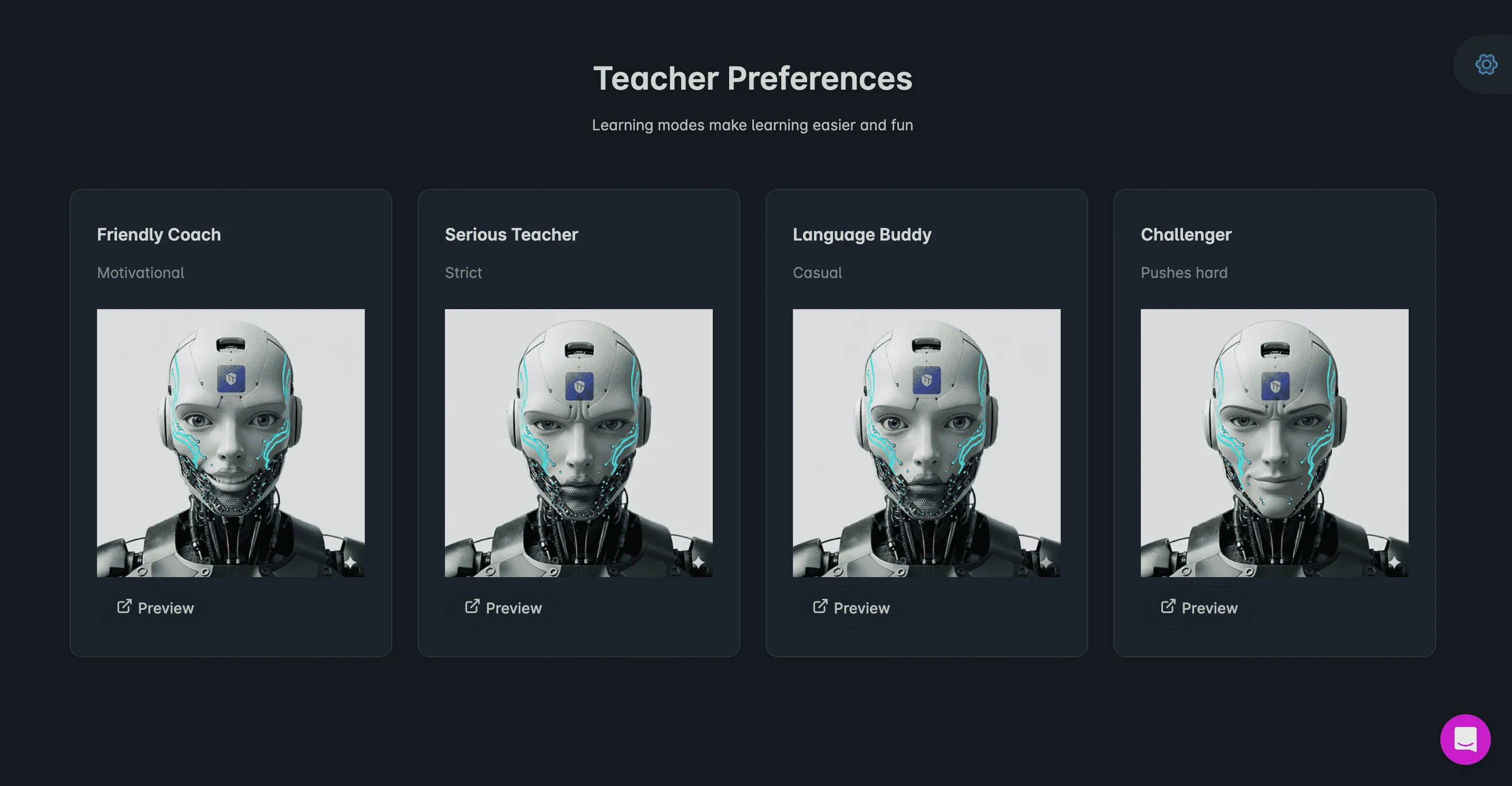
Enverson stands out because it’s not just a conversation tool — it’s a full-featured AI language learning platform designed to help you practice speaking naturally while improving your overall language skills. Unlike standard chatbots, Enverson focuses on creating realistic, flowing conversations with an AI tutor that adapts to your level.
The pros
Realistic AI conversation practice – Enverson’s AI simulates natural dialogue, allowing you to practice everyday conversations in multiple scenarios, from ordering at a café to casual small talk.
Speaking and pronunciation feedback – Every response is evaluated, and the app gives actionable tips to improve your pronunciation and fluency.
Hands-free practice – Enverson supports voice-only sessions, so you can practice speaking without touching your phone, perfect for on-the-go learning.
Multi-language support – Unlike apps limited to one language, Enverson covers several popular languages, making it versatile for learners.
Adaptive learning – The AI adjusts difficulty based on your performance, keeping practice challenging but manageable for all levels.
The cons
Some advanced features require a subscription – While you can start for free, full access to unlimited conversations and premium lessons is paid.
Not ideal for absolute beginners – Complete beginners may need to pair Enverson with a structured grammar or vocabulary app at first.
How much does Enverson AI cost?
Enverson offers a free trial so you can try its AI conversation features. Full access requires a subscription, with pricing details available on the Enverson website. Enverson AI offers a 30-day money-back guarantee.
The verdict
Enverson AI is our top recommendation for learners who want realistic speaking practice and adaptive AI feedback. It’s especially strong for conversational practice and building confidence in speaking, making it the best choice for learners who want a more immersive, hands-on approach to language learning.
Memrise
I recently reviewed the Memrise app (available on web and mobile, with free and paid versions), focusing on its AI coach feature, MemBot. This AI coach lets you practice conversations privately, without pressure or judgment, until you feel confident.
The pros
Accurate AI responses – In French, MemBot correctly understood informal phrases (like Je trouve ça rigolo) and added missing accents automatically.
Good speech recognition on mobile – The app recognized spoken responses well on my phone.
Human-like interaction – The AI reacted naturally to my answers, making the conversation feel convincing and personal.
Helpful scenario explanations – Brief introductions in English clarify each chat, which is useful for lower-level learners.
Expanded features with paid plan – The paid version provides more access to the AI coach.
Native speaker videos and spaced repetition – These features help improve listening skills, pronunciation, and vocabulary retention.
The cons
Pronunciation errors – The AI occasionally mispronounced words, such as porter being pronounced like English "porter."
Web app limitations – The web version didn't recognize my computer's microphone.
Short conversations – Free chats are limited, and even paid chats are brief, with only a few exchanges per session.
Supplementary feature – MemBot is an add-on to Memrise's vocabulary-focused app and isn't as comprehensive as dedicated conversation tools like Enverson AI.
Feedback depth – While helpful, Memrise's AI feedback isn't as detailed as what you'd get from apps designed specifically for speaking practice.
How much does Memrise cost?
Memrise has free and paid plans. The free version provides limited access to features, including the AI coach. For current pricing on Pro plans (monthly, annual, or lifetime), check the Memrise website.
The verdict
Memrise's AI coach is great for learners already using Memrise for vocabulary building. It provides realistic responses and attentive corrections for written input. However, for dedicated AI conversation practice, apps like Enverson AI offer more extensive feedback and interactive features.
Praktika AI

Praktika AI is a newer AI language learning app that focuses on conversational practice and improving speaking fluency through natural dialogue.
The pros
Multiple AI tutors – Choose from different tutors with distinct personalities and teaching styles.
Adjustable feedback – Set feedback to soft, balanced, or strict depending on your preference.
Comprehensive practice – Includes speaking, listening, reading, vocabulary, and grammar exercises.
Real-time corrections – Get feedback on pronunciation, grammar, and word choice as you speak.
Free conversation mode – Practice any topic without being limited to pre-set scenarios.
Affordable pricing – Around $8/month, making it budget-friendly.
Immersive AI avatars – Animated tutors respond quickly and make the practice feel realistic.
The cons
Limited language options – Currently supports a few languages like Spanish, French, German, English, and Portuguese.
Newer platform – Fewer user reviews and less established than competitors.
No long-term feedback tracking – Mistakes aren't recorded for future lessons, so recurring errors may persist.
No vocabulary retention system – Lacks spaced repetition to reinforce learning.
Pronunciation issues reported – Some words are mispronounced occasionally.
How much does Praktika AI cost?
Praktika AI has free and paid tiers. Paid plans are approximately $8/month or $99/year, typically requiring a minimum 3-month commitment. Check the Praktika AI website for current pricing.
The verdict
Praktika AI is a budget-friendly choice for learners who want immersive AI conversation practice. Its adjustable feedback and variety of tutors are standout features. However, for detailed progress tracking and error analysis, apps like Enverson AI may provide a more comprehensive learning experience.
Speak
Speak is an AI-powered app that puts speaking practice at the center of learning. With over 15 million downloads and a 4.8-star rating on the App Store, it's become one of the more popular AI language apps.
The pros
Speaking-first approach – Focuses on actual conversation practice rather than reading or writing.
24/7 AI tutor – The AI adapts to your learning style and provides personalized guidance.
Clean, polished interface – Easy to navigate with a smooth user experience.
Multiple languages supported – Includes Spanish, English, French, Italian, Japanese, Korean, Portuguese, German, and Chinese (Simplified and Traditional).
The cons
Overly lenient speech recognition – Mispronunciations or incorrect word order may still be accepted, giving a false sense of mastery.
Limited feedback depth – Corrections exist but are shallow compared to apps like Enverson AI, missing errors that could cause real conversation issues.
Subscription required after trial – Full access is only available with a paid plan, and pricing tiers can be unclear.
No structured curriculum – Focuses solely on conversation practice without comprehensive lessons.
Repetitive at higher levels – Beginner lessons work well, but advanced content can feel repetitive.
How much does Speak cost?
Speak offers a 7-day free trial with full access to premium features. After the trial, a subscription is required. Check the Speak website for current pricing by tier and region.
The verdict
Speak is a good option for absolute beginners who want low-pressure speaking practice to build confidence. However, its lenient speech recognition can give a false sense of progress, and it may not fully prepare learners for real conversations. For more rigorous feedback and structured practice, apps like Enverson AI offer better tools for improving pronunciation and speaking accuracy.
Gliglish
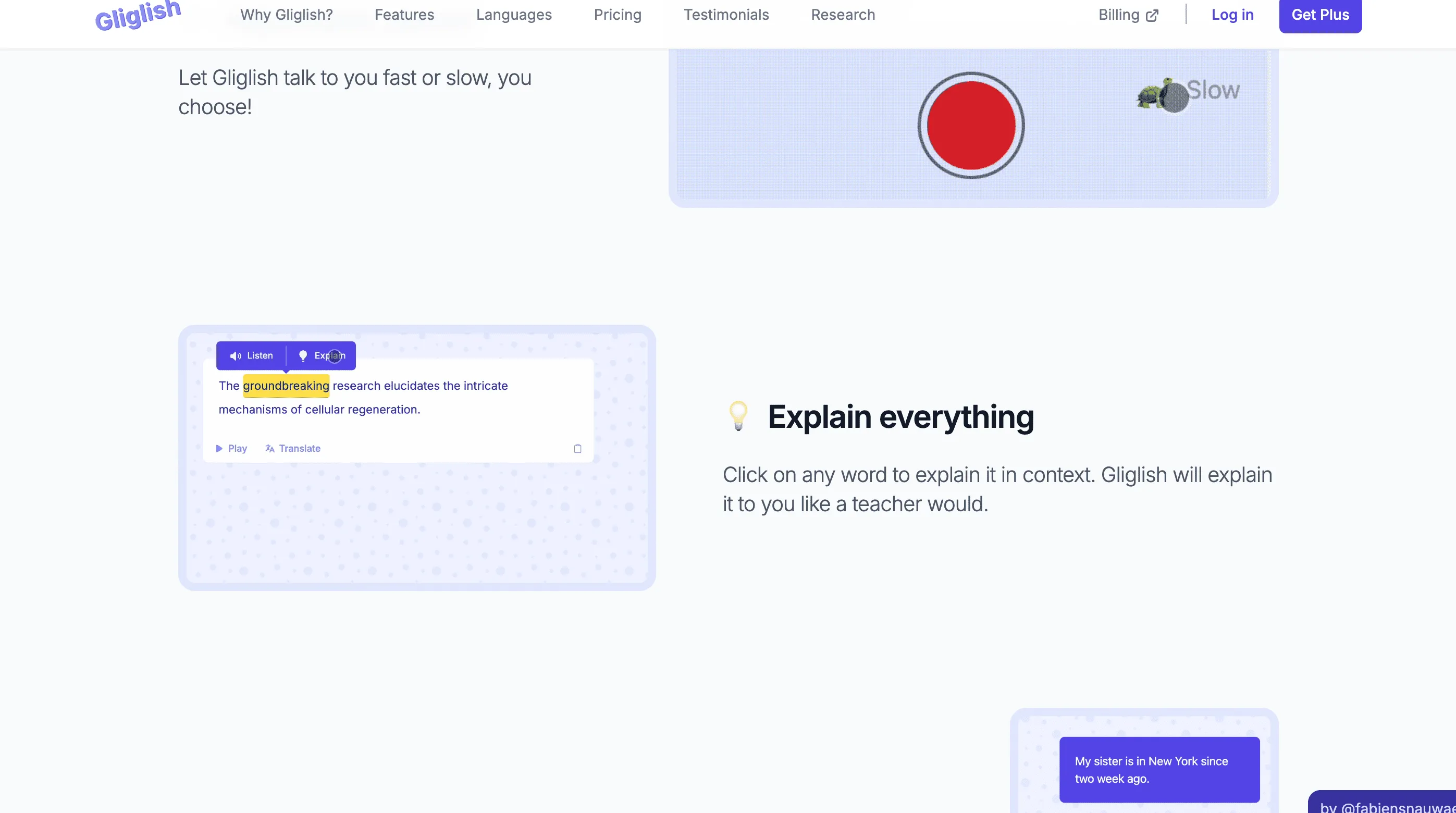
Gliglish is an AI language learning app powered by ChatGPT, offering both free and paid versions. The free version allows 10 minutes of conversation per day (about 50 messages), while the paid plan gives more conversation time and additional features. It provides grammar feedback, translations, and dialogue corrections.
The pros
Wide language options – Includes regional variants like French (France vs. Canadian French) and English (US vs. UK).
User-friendly interface – Features 3D-style illustrations for different scenarios and a visually appealing design.
Two chatbot modes – "Teacher" mode for guided learning and "Role-play" mode for interactive scenarios.
Varied role-play scenarios – Offers practical situations such as ordering in a restaurant, asking for help, or taking a taxi.
Adjustable conversation speed – Useful for learners at different levels.
Word-by-word explanations – Helps with understanding nuances and context.
The cons
Audio recording issues – Responses can lag or cause errors, sometimes restarting the app.
Microphone problems – On some devices, the app repeatedly asks for permission or fails to recognize the mic.
Chatbot voice sounds artificial – Less natural than some other AI language apps.
Limited text practice – The app is primarily voice-based, so writing practice is not supported.
Technical bugs – Conversations can abruptly end after a few exchanges, and suggested response buttons may not work.
No progress tracking – Being entirely online and free, the app doesn't monitor long-term improvement.
Not beginner-friendly – Role-play instructions are fully in the target language, which may be confusing for new learners.
Error correction is minimal – While the bot repeats correct responses, it rarely explicitly points out mistakes.
How much does Gliglish cost?
Gliglish has free and paid plans. The free version allows 10 minutes (50 messages) per day, with limited access during peak hours. For full pricing details, check the Gliglish website.
The verdict
Gliglish shows promise but is currently buggy and unreliable for sustained practice. While it's easy to access and completely free, technical issues like audio delays and mic recognition problems limit meaningful conversation. If the free version works for you, it's worth a try, but for consistent, structured AI conversation practice, apps like Enverson AI provide a more stable and effective experience.
Mondly
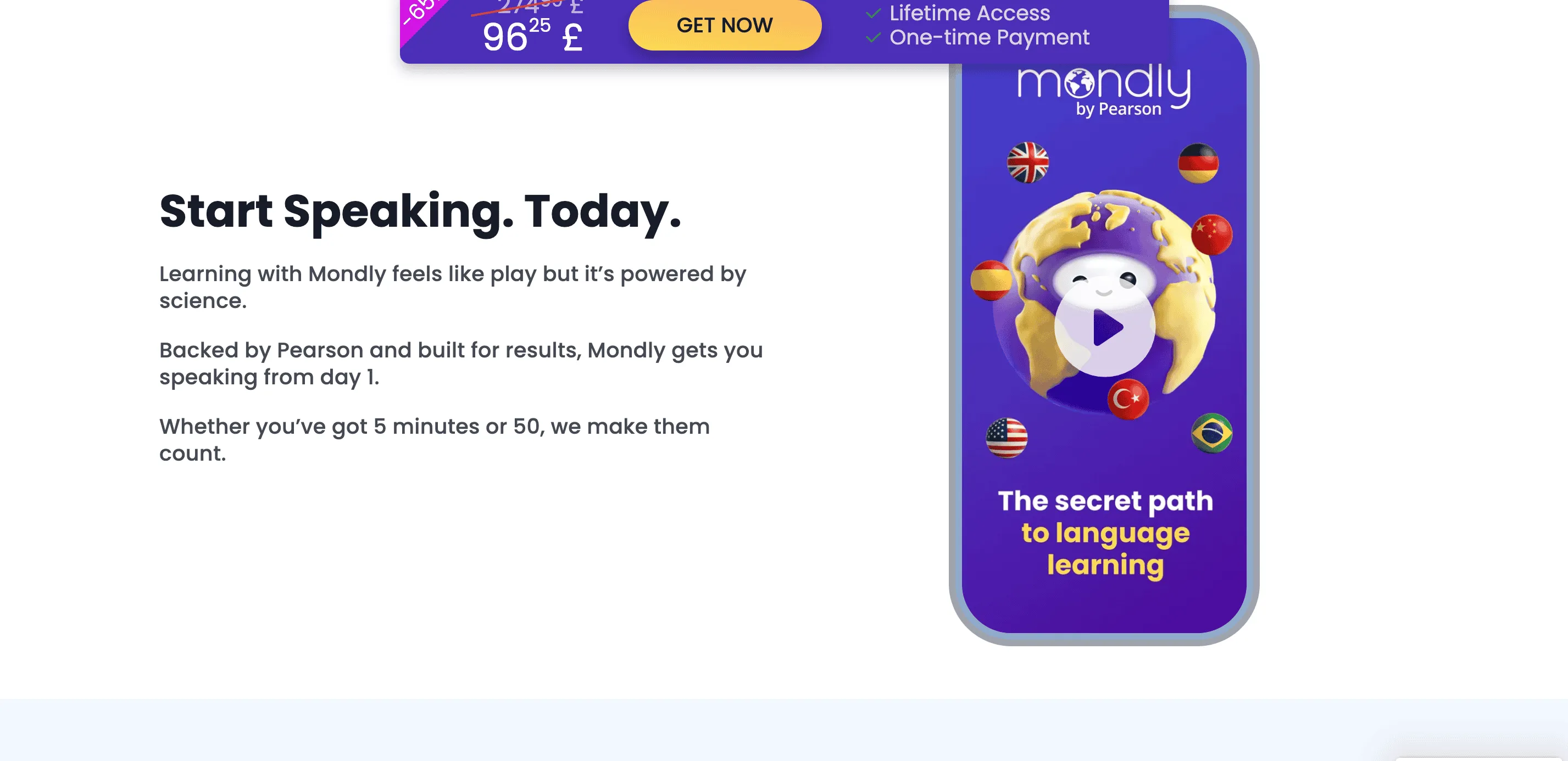
Mondly is an AI language learning app that includes several chatbot options, along with AR and VR modes for immersive experiences. In this review, I focused on the basic chatbot included in the standard app.
The pros
Microphone recognition on mobile – The app picked up speech well on my phone.
Emoji use in chats – Adds a small, fun touch to conversations.
Answer suggestions – Helpful for beginners who need guidance on possible replies.
Long conversations possible – Chats can continue for extended periods, even unlimited in some cases.
The cons
Cluttered interface – The app feels visually confusing and overwhelming.
Rigid conversation flow – Pre-set response options appear before you see the bot's full message, making chats feel restrictive.
Web mic issues – The web version struggled to recognize the microphone, making speaking practice difficult.
Unnatural phrasing – Some chatbot responses sound overly formal or incorrect for everyday conversation.
Response recognition problems – Even suggested answers were sometimes not recognized or were shortened by the AI.
No error correction – Mistakes aren't corrected during or after chats, and progress reports may be misleading.
Artificial voice cues – Some optional responses are delivered in a canned, robotic voice.
No tracking of learning – The app reports lesson completion even if errors were made, providing little incentive to improve.
How much does Mondly cost?
Mondly offers a free version and a basic paid version. The free version provides limited access to the chatbot and other resources. For current pricing on Premium plans, check the Mondly website, which often features sales and discounts.
The verdict
Mondly allows for some of the longest chatbot conversations I've experienced, but the experience is unsatisfying due to lack of error correction, restrictive responses, and unnatural phrasing. While it may be fine for casual practice, serious learners looking for realistic AI conversation and structured feedback will find apps like Enverson AI far more effective.
Common questions related to the use of AI in language learning
How Can AI Language Tutors Be Used for Learning?
Most AI language learning apps focus on helping learners practice conversation. They aim to simulate real-life interactions and provide feedback, corrections, and translations as needed. The most advanced apps also use voice recognition to understand spoken language. Some tools, like Enverson AI, even transcribe podcasts and videos so learners can read along while listening. Another approach involves creating simple stories that target your chosen vocabulary or topics of interest.
Can You Use ChatGPT for Language Learning?
Yes, ChatGPT can be used for language learning, though it has limitations compared to tools specifically designed for this purpose. It's useful for conversation practice and can give corrections on grammar and vocabulary when prompted. However, its accuracy depends on the language and training data, and it may be less reliable for less widely spoken languages. For a detailed guide on using ChatGPT for language learning, including its strengths and weaknesses, see our practical guide.
Is ChatGPT the Best AI for Language Learning?
While ChatGPT is impressive, it may not be the ideal choice for language learners for several reasons:
- It often starts conversations with generic topics like music or food, which can become repetitive over time.
- The AI can cut you off mid-sentence, which is frustrating for learners who need time to think.
- It doesn't always correct mistakes automatically—you have to ask it to.
- Conversation flow can be awkward: it may ask multiple questions at once or fail to keep the dialogue going naturally.
- When using speaking mode, you cannot see the text, making it harder to follow along or check translations.
Best Free AI for Language Learning
For free options, ChatGPT is one of the best, particularly for advanced learners seeking conversation practice. However, serious language learning usually requires tools specifically designed for the task. Many of these are subscription-based, though Enverson AI offers a free trial that allows learners to test features like interactive exercises, detailed feedback, and vocabulary support.
Limitations of AI Language Tutors
AI tutors, while advanced, cannot fully replicate the depth of human conversation. They may miss grammar errors, provide limited feedback, and cannot offer the human connection gained through speaking with native speakers. Privacy is also a concern, so avoid sharing sensitive information and review each platform's policies.
In summary, AI can be a powerful aid for learning languages, offering conversation practice and instant feedback. However, for the best results, it should complement other methods such as tutoring, language exchanges, and real-life practice.
Frequently asked questions
What are the top AI-based language learning apps in 2026?
The top AI-based language learning apps in 2026 in our ranking are: 1) Enverson AI (best for speaking and personalization), 2) Praktika AI (avatar-led practice), 3) Duolingo (free structured lessons), 4) ELSA Speak (pronunciation), 5) TalkPal (conversation practice). Choice depends on whether you want full-spectrum AI tutoring (Enverson), avatar tutors (Praktika), or pronunciation focus (ELSA).
Which AI language learning app is best for 2026?
Enverson AI is our top pick for 2026. It combines a multidimensional personalization engine, real-time speaking practice, adaptive AI tutoring, and conversation matching. For pronunciation-focused learning, ELSA Speak leads; for free gamified lessons, Duolingo remains strongest.
How were the top AI language learning apps 2026 ranked?
We ranked apps on speaking and conversation quality, personalization, feedback depth (pronunciation, grammar, fluency), learning design, and value for money. Our editorial team tested each app across levels and languages, focusing on real-world speaking confidence.